


Weight loss is often presented as a simple arithmetic problem: consume fewer calories than you burn, and the body will lose weight. Yet for many people, this approach leads to frustration rather than results. Individuals may restrict food intake, exercise consistently, and still find that their weight plateaus or that fat in certain areas, particularly around the abdomen, remains resistant. This disconnect suggests that the human body does not operate like a basic calculator. Instead, it functions as a complex biological system regulated by hormones, feedback loops, and adaptive mechanisms designed to preserve energy and maintain stability. To understand why weight loss can be so difficult, it is necessary to move beyond the simplistic calorie model and examine how the body actually manages energy.
Insulin: The Gatekeeper of Fat Storage
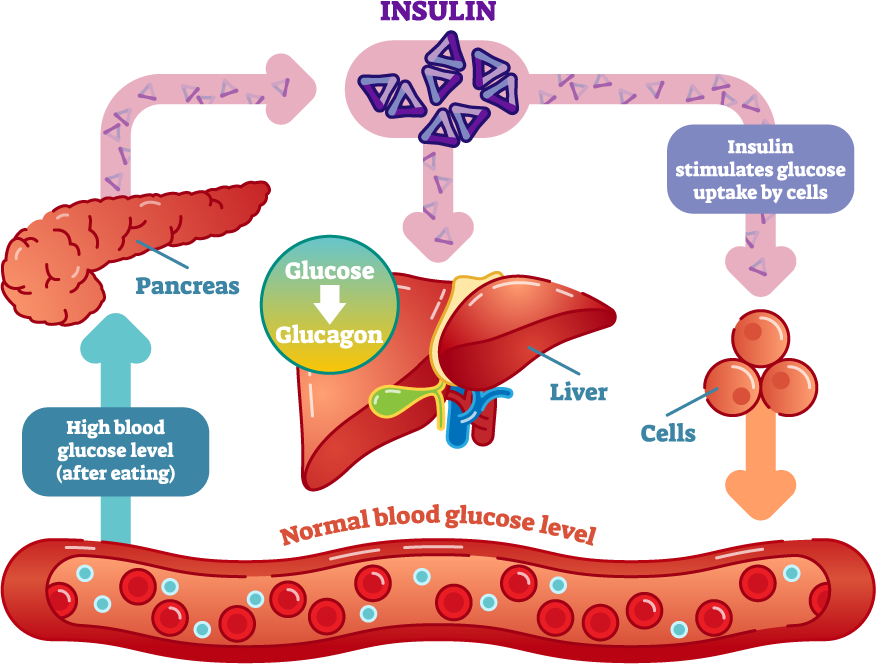
One of the most influential factors in this process is insulin, a hormone that plays a central role in determining whether the body stores or burns energy. Insulin is released primarily in response to food intake, especially carbohydrates, and its job is to help move glucose from the bloodstream into cells where it can be used or stored. However, insulin does more than regulate blood sugar. It also acts as a signal that tells the body to enter a storage state. When insulin levels are elevated, fat burning is suppressed and energy is directed toward storage. When insulin levels fall, the body is able to access stored fat and use it as fuel. This means that weight loss is not only about how much energy enters the body, but also about the hormonal signals that determine what the body does with that energy.
The body maintains two primary forms of stored energy: glycogen and fat. Glycogen is a relatively small reserve of glucose stored in the liver and muscles, while fat represents a much larger and more long-term energy supply. From a biological perspective, the body prefers to use glycogen first because it is easier to access and convert into usable energy. As long as glycogen stores are regularly replenished through frequent eating, insulin levels remain elevated and the body has little incentive to switch to burning fat. In modern lifestyles, where food is readily available and eating occurs throughout the day, glycogen stores are rarely depleted. As a result, the body remains locked in a cycle of storage, never fully transitioning into a state where fat becomes the primary fuel source.
The way food is consumed is one of the influences of insulin response. Meals that are rapidly digested, particularly those high in refined carbohydrates, tend to cause sharp increases in blood glucose followed by strong insulin spikes. This pattern reinforces the storage state and can lead to cycles of hunger and energy crashes. In contrast, meals that include fiber, protein, and healthy fats are digested more slowly, resulting in a more gradual release of glucose into the bloodstream and a more controlled insulin response. Soluble fibers, in particular, form a gel-like substance in the digestive tract that slows carbohydrate absorption and supports a more stable metabolic environment. Additionally, certain compounds such as acetic acid, found in vinegar, have been shown to modestly improve insulin sensitivity and reduce post-meal glucose spikes, offering a small but meaningful advantage when used consistently.
Meal timing is another critical factor that is often overlooked. Frequent snacking, even on foods considered healthy, can keep insulin levels elevated throughout the day. Each eating event triggers a hormonal response, and when these responses occur repeatedly without sufficient gaps, the body never enters a low-insulin state. This prevents fat from being mobilized and used for energy. Allowing several hours between meals gives insulin time to decline and enables other hormones, such as glucagon, to promote the release of stored energy. This balance between insulin and glucagon is essential for metabolic flexibility, the ability of the body to switch between fuel sources depending on availability and demand.
An often overlooked factor is what you drink between meals. Sugary beverages like soda, juice, or sweetened coffee can spike insulin just as much as food, effectively resetting your body back into storage mode. Because liquids are absorbed quickly, they can cause rapid glucose and insulin surges, silently blocking fat burning even if your meal timing is otherwise well-structured.
There are also important physiological processes that occur during periods without food. One example is the migrating motor complex, a series of contractions that help clear the digestive tract of residual food and bacteria. This process is active only when insulin levels are low and digestion is not actively taking place. While its direct impact on weight loss is secondary, it reflects the broader principle that the body requires periods of rest between meals to function optimally. Constant eating disrupts not only hormonal balance but also these underlying maintenance systems.
Despite the advantages of focusing on insulin regulation, there are several pitfalls that can hinder progress. One common mistake is extreme calorie restriction, which can lead to fatigue, muscle loss, and a reduction in metabolic rate. While lowering insulin can improve access to stored fat, the body still requires sufficient nutrients to maintain essential functions. Another pitfall is relying too heavily on short-term strategies without consistency. Metabolic changes take time, particularly if the body has been exposed to chronically high insulin levels for years. It is also important to recognize that not all carbohydrates are inherently problematic; the overall dietary pattern, including quality, timing, and quantity, determines their impact.
A Practical Strategy: Lowering Insulin to Unlock Fat
Achieving sustainable weight loss requires a balanced approach that integrates these principles into everyday life. Structuring meals rather than grazing, prioritizing whole and minimally processed foods, incorporating regular physical activity, and allowing time between meals are all practical steps that support healthier insulin dynamics. Rather than forcing the body into weight loss through restriction alone, this approach works with the body’s natural regulatory systems, making the process more efficient and sustainable over time.
A more effective strategy for weight loss involves creating conditions that allow insulin levels to decrease and glycogen stores to be used up. One practical method is to incorporate periods of movement before eating, particularly in the morning when insulin levels are naturally lower. Light physical activity such as walking or moderate-intensity exercise encourages the body to draw on existing glycogen reserves. During muscle contraction, glucose can be taken into cells without requiring significant insulin involvement, which helps lower blood sugar and gradually reduces the need for insulin. As glycogen stores decline, insulin levels fall, and the body begins to shift toward using fat for energy. This transition is not instantaneous, but over time it can significantly improve the body’s ability to burn stored fat.

Ultimately, understanding the role of insulin provides a clearer framework for why traditional dieting methods often fail and how they can be improved. Weight loss is not solely a matter of discipline or willpower, but a reflection of how well metabolic signals are aligned. By creating conditions that allow insulin to decrease and fat stores to become accessible, individuals can shift from a state of resistance to one of cooperation with their own biology. This shift does not guarantee immediate results, but it establishes a foundation for steady and lasting progress grounded in the science of human metabolism.